OWLAI VASESENPT1 / 22
↓ next

OWLAI Studio. Strategic plan for mobile carriers and VAS companies in Latin America. October 2026.

2027: the year VAS stops just buying rights.

On March 3, 2026, Movistar Chile pulled Perplexity because the licenses had run out. Nobody disclosed how many subscribers kept paying. That is what this deck is about.

I'm Andrea.
Send me the boss's voice note and I'll tell you what he's asking.


02

You built something no new network builds overnight.

Behind every customer sit years of investment, teams that learned each market, and the trust of those who choose you every month. That relationship is still yours.

USD 600 Bof economic value generated by the region's mobile ecosystem in 2025. 8.6% of GDP.
63%of the population uses mobile internet. Another 32% has coverage and still doesn't use it.
USD 71.8 Bin carrier revenue in 2025. 2030 forecast: USD 83.9 B.
USD 75.8 Bin planned network investment between 2025 and 2030.

GSMA, The Mobile Economy Latin America 2026. Mobile internet: 2024 figures.1

03

You know this week.

You run digital services at a carrier, or you sell services to several. You've been doing this for years. And in October 2026 the week looks like this.

A license renewal lands. The minimum guarantee goes up. The catalog it covers sells less than last year.
Marketing announces twelve free months of someone else's AI. It never came through your desk. It leaves nothing on your line.
The dashboard shows the same thing as last quarter: the content subscriber base is shrinking. What the subscriber used to do with a premium SMS, today they do for free on TikTok or WhatsApp.
And someone, in some committee, asks what you're going to do about AI.

04

For twenty years, VAS bought rights to distribute what others produced.

It worked while the title was worth something on the phone. It stopped working when the title arrived free through another channel and the content owner went direct.

The rights modelHow it workedWhat broke it
The catalog unitThe title: a game, a video, a ringtone, a brandThe title arrived free on TikTok, YouTube and WhatsApp
How it was securedLicenses: minimum guarantee, territory, months of negotiationSlow and expensive for an audience that changes every quarter
Who producedStudios, labels and production houses; VAS distributedNetflix and Spotify went direct and left the aggregator as a billing rail
Where the margin satBetween the license and the invoiceLegacy bases are falling 30% a year; billing rails are down 15%; bundling is up 22%10
What the subscriber wantedTo consume somethingTo do something: solve, learn, create, talk

The industry's answer so far is more of the same with better brands: licensed premium content, more expensive, for the same act of consuming.

05

2025 and 2026: the year of the giveaway. And the day it got cut.

Carriers gave away someone else's AI for six or twelve months. On March 3, 2026, Movistar Chile pulled Perplexity "because the licenses ran out". Airtel did not renew. Vivo and Telcel are already charging list price on the bill. Nobody disclosed how many subscribers paid afterwards.2

CarrierOfferWhat happened
Movistar ChilePerplexity Pro, 12 months freeCut in March 2026, 300,000-license cap
Airtel IndiaPerplexity Pro for 360 million customersEnded in January 2026; active users went from 22M to 14M7
Vivo BrasilGoogle AI Plus, 6 to 12 monthsRenews at R$ 24.99 per month4
Telcel MexicoGoogle AI Pro, 3 to 6 months, postpaid onlyRenews at MXN 395; prepaid excluded6
Claro BrasilChatGPT Plus, 4 months, bundle onlyClaro doesn't bill it; the user stays with OpenAI5
TIM BrasilNo offer"We don't want to repeat with AI the mistake we made with unlimited WhatsApp"9

06

In eighteen months, someone will ask what the in-house AI VAS is. "We gave away Gemini" is not an answer.

The window is closing from the outside.

WhatsApp locked out third-party assistants across Spanish-speaking America on January 15, 2026. In September, Meta launched Muse — with memory and proactive messages — inside WhatsApp. The day it speaks the Spanish of Lima, your subscriber already has an assistant. And it isn't yours.11

The habit forms only once.

People don't swap assistants the way they swap ringtones. The first one that greets them by name, in their language, from their number, is the one that stays. The second one arrives too late.

The catalog keeps falling in the meantime.

Every quarter without an in-house AI service is another quarter of horoscopes and ringtones competing against free TikTok. It isn't that nothing happens: things happen against you.

07

What gets said in the room when the idea comes up.

"We don't have our own AI."

Nobody does; nobody builds a model anymore. What you build is the ability to navigate between the ones that exist: pick one per task, swap it when a better one ships, and hide them all behind a single name.

"It's crazy expensive."

A month of text from an active subscriber costs cents. A month of voice costs dollars, which is why it's capped. Inference drops tenfold per year.18 What was expensive was the license.

"Google is already there."

Giving away Gemini is the same old rights model, with a provider stronger than any studio. And when the promo ends, the account, the habit and the subscription sit on the other side.

08

When the promo ends, whose subscriber is it?

Every customer who activates Gemini or ChatGPT with their plan opens an account with them. They keep the account, the habit, the data, and when the giveaway ends, the subscription.

Claro Brasil said it plainly: it won't bill ChatGPT. The user continues directly with OpenAI.5

AI is already free. What matters is who owns the subscriber when they use it.

09

Four ways to bring AI to the subscriber. One is empty.

What carriers have done so far, sorted by two questions: whose intelligence is it, and does anyone pay for it.

Free
Paid
Someone else's AI

The giveaway

Holds the plan for a few months. Leaves no VAS revenue. The subscriber ends up with the provider.

Movistar, Claro, Airtel, Jio

The resale

The carrier bills Google's list price on the invoice. Its share is not disclosed.

Vivo R$ 24.99 · Telcel MXN 395 · Orange
Your own AI

The experiment

A carrier-branded assistant with no billing model. SK Telecom launched it in 2022; still free four years and 10 million users later.12

SK Telecom A.

Nobody, in Latin America.

A carrier-branded assistant, paid from the balance like a top-up, that lives on the phone people already own.

That's where the opportunity is.

10

What artificial intelligence changes in VAS isn't the catalog. It's how the catalog is produced.

Production takes weeks, not quarters.

With AI-assisted engineering, a small studio put nine products online. The catalog stops being only purchased and starts being manufactured.

Content is generated or transformed, not licensed title by title.

Books that become episodes, radio stations with AI artists, voice teachers. The cost moves from the license to inference, which drops every year.

No single AI is the product. The product is navigating between all of them.

Each task goes to the model that solves it best at the lowest cost. The new model gets adopted the next day. Nobody is locked into a provider.

The carrier's assets are worth more, not less.

The number as identity, the balance as payment, SMS as channel, trust. It's the one thing an AI product cannot buy.

11

AI didn't win the feature film or the premium song. It won the one-minute episode, the background station and the dub.

These are phone formats. None are bought title by title. And the rights holders are already licensing them to AI, not fighting it.

  • Where AI doesn't replaceOver half of daily uploads to Deezer are 100% AI; actual listening is 1 to 3% of streams, and Spotify pulls that music out of the algorithm.23 OpenAI shut down Sora in 2026, taking the USD 1 B Disney deal with it.24 49% of the audience is less excited about a 100% AI feature film.25
  • Where it already winsMicrodramas: outside China, AI-made launches jumped from 3% to 66% across two quarters of 2026, with the same paid conversion as live-action series (23.6% vs 23.9%).26 A series costs up to USD 60,000 in weeks, versus USD 100,000 to 300,000 in months.27
  • Where rights get amplifiedUniversal, Warner and Spotify signed licenses in 2025 and 2026 for covers, remixes and authorized voices as paid products. Goldman Sachs projects USD 3.3 B per year for rights holders by 2035.28 Lionsgate took equity in Runway and is producing a short series with its catalog.29
+913%installs of microdrama apps in Latin America, Q1 2026. The region is 23% of global downloads.26
25 minper day on microdramas; ReelShort holds more mobile time than Netflix in the U.S.26
326 Mviews in ViX MicrO's first year, 145 one-minute Spanish originals. In Buenos Aires, Gennial produces 20 AI series per month.27
USD 0.16per minute of AI dubbing, versus over USD 100 in traditional dubbing. YouTube already auto-dubs for 6 million people per day.30

12

We are the bridge between what AI already makes possible and what your customers can do on their phone.

OWLAI Studio designs and produces digital products with artificial intelligence for carriers and VAS companies. We use it every day to produce, not to talk about it. That's why we can experiment at the market's pace.

Weeksfor a new product
Daysfor a profile or a change
Hoursfor a tweak
  • Nine products onlineEach one can be tried today from a phone, with its own brand or with the carrier's. See the demos.
  • A platform that navigates between eight intelligencesMulti-carrier, with phone-number login, image, music and voice agents.
  • An operations console that ships improvements in the same cycle they're designed inOpt-ins and opt-outs via webhook, retention cohorts, cost per subscriber from the first message.
  • Twenty years in VAS in the regionWe know the billing, the carrier, the regulator and the prepaid subscriber.

We call it humanity well directed: when producing with AI is within everyone's reach, what sets a product apart is the judgment of those who direct it.

13

The plan: from licensing to producing, in three moves.

What a carrier or a VAS company changes in 2027. It doesn't require replacing what you already sell; it covers what what you already sell doesn't cover.

1
Change the catalog unit.

From the title to the task: solve, learn, create, converse, listen, watch.

A portfolio sorted by what the subscriber does, not by what they consume.

2
Set up a production capability, not a licensing chain.

From the contract to the studio: a product in weeks, localized by configuration, run from a console.

The partner brings product, models and operations. The carrier or the aggregator brings distribution, billing and brand. The split, by contract.

3
Distribute with what you already have.

From the app store to the number: login with the phone, pay from the balance, campaigns by SMS and by segment.

Launches in waves by profile. 90-day pilot with a signed baseline.

14

FILI. The assistant you hired.

The first product in the plan. You tell it what you do, and your assistant shows up — with its name, its face, its voice and the five tasks for your profile. Five and not twenty: an assistant that does everything does it worse than what's free.

4profiles: student, work, business, family
5tasks per profile, done very well from day one
1phone number to log in, no account
0models to choose. FILI already chose them
Try FILI on a phone

15

Two scenes, at nine at night.

Andrea, work
Rosa's assistant — Rosa is a hotel receptionist. Her boss sent a seven-minute voice note.
ROSAForwarding you the boss's voice note, it's seven minutes, I didn't listen to it.
ANDREADone. He's asking three things: inventory before Friday, confirming Saturday's shift, and the supplier's phone. Shall I reply for you?
Lucía, family
Carmen's assistant — Carmen is a mother of two. A letter arrived from the bank she can't make sense of.
CARMENLook at this photo, it's a letter from the bank, I can't tell if they're charging me something.
LUCÍAThey aren't charging you anything. They're letting you know that from next month the maintenance fee goes up. If you want, I can tell you what to ask if you want to push back.

It remembers you by your number: you switch phones and it still knows you. In the morning, it writes first. And it knows when to go quiet: a summary gets delivered short; an English practice session, by conversing. Talk to Andrea now.

16

MOU paved the way. FILI is the front end.

This is what move 2 looks like in practice. FILI doesn't start from zero: it builds on what MOU already solved with carriers, and in the pilot it connects to Bunker, the console that manages opt-ins, opt-outs and billing.

  • Login with the phone numberNo email, no password, no app store.
  • Multi-carrierBrand, accent, currency and limits change. The engine is the same.
  • Eight intelligences, chosen by taskChatGPT, Claude, Gemini, Mistral, Grok, in-house model, image and music. The subscriber sees none of them.
  • Measurable operationsOpt-ins and opt-outs via webhook with the aggregator, signed access, active users by state transition, retention cohorts.
Try MOU on a phone
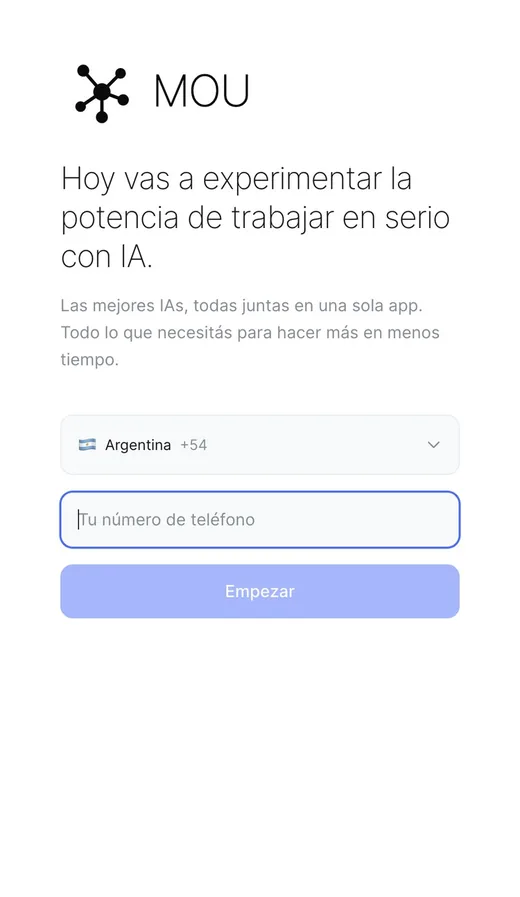
MOU login screen with phone number
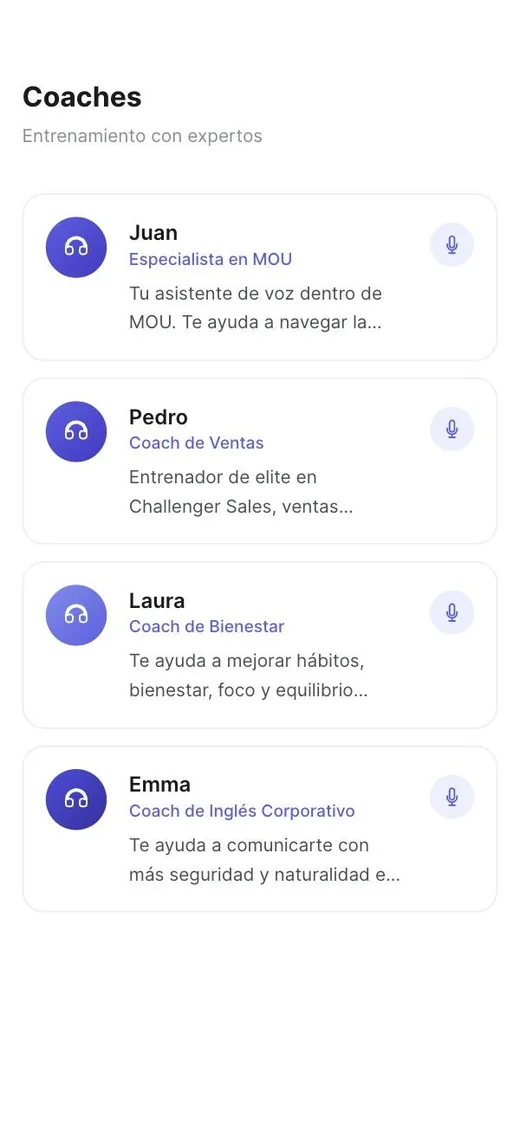
Voice coaches in MOU

17

The road's tests: the phone, the voice and the regulator.

We don't promise an ARPU. We show what drives the business, with ranges, and we measure it in the pilot before projecting.

76%

of phones sold in the region in 2025 are entry-level or mid-range; eight of the ten top sellers are 4G. Memory doubled in price in a year.16 Hence: browser, lightweight text, measured voice.

Cents and dollars

An active subscriber costs cents per month in text and USD 0.80 to 7 in voice depending on minutes and provider.19 FILI works as a business if voice is the hook and text is the habit.

Opt-in and opt-out in a day

In 2026 Anatel opened a consultation on consent and VAS billing; Osiptel imposed automatic refunds of improper charges.22 A service with explicit opt-in and daily use plays in your favor. Opportunistic VAS plays against.

VariableRange of assumptionsWhy it matters
Activation from the carrier SMS1 to 5% of the invited baseSets the size of the pilot
Price to the subscriberEquivalent to USD 1 to 3 per month, charged from the balance by day or by weekHas to fit inside a USD 7 to 9 monthly spend
Billing success against the balance40 to 70%It's the gap between billing and revenue
Voice minutes per active user per day2 to 5It's the margin variable; every session has a cap
30-day retentionNo public referenceWithout it there's no subscriber lifetime value

18

Ninety days, one cohort, one signed baseline.

Weeks 1 to 3
Build

Two profiles, their five tasks, memory by number. Cost per subscriber measured from the first message.

Weeks 4 to 6
Connect

Opt-in and billing with the carrier, age verification, usage caps. Voice tested on real phones on the network.

Weeks 7 to 12
Measure

A cohort invited by the carrier. Activation, conversations per subscriber, who comes back at seven and at thirty days, who pays, how much each active user costs.

ScaleTo the whole base, and add the other profiles.
AdjustPrice, voice or tasks, and run the cohort again.
CloseWith the numbers in hand. Saying no is also a valid answer.

19

Day one.

One message, one number, nothing to download. The customer answers what they do, and their assistant introduces itself and gets to work. The campaign changes by profile; the promise doesn't.

In 2027 there can be a first Latin American carrier with its own assistant paid from the balance. Today that place is empty.

SMS · YOUR CARRIERIsn't it time you had your own assistant? One that helps with your tasks. One that knows you. Reply 1 if you study, 2 if you work, 3 if you run a business, 4 if you run the house.
2
ANDREAHi. I'm Andrea, your assistant. What should I call you? Send me the next voice note you don't feel like listening to and I'll tell you what it's asking.

20

Eight more experiences, produced with the same plan.

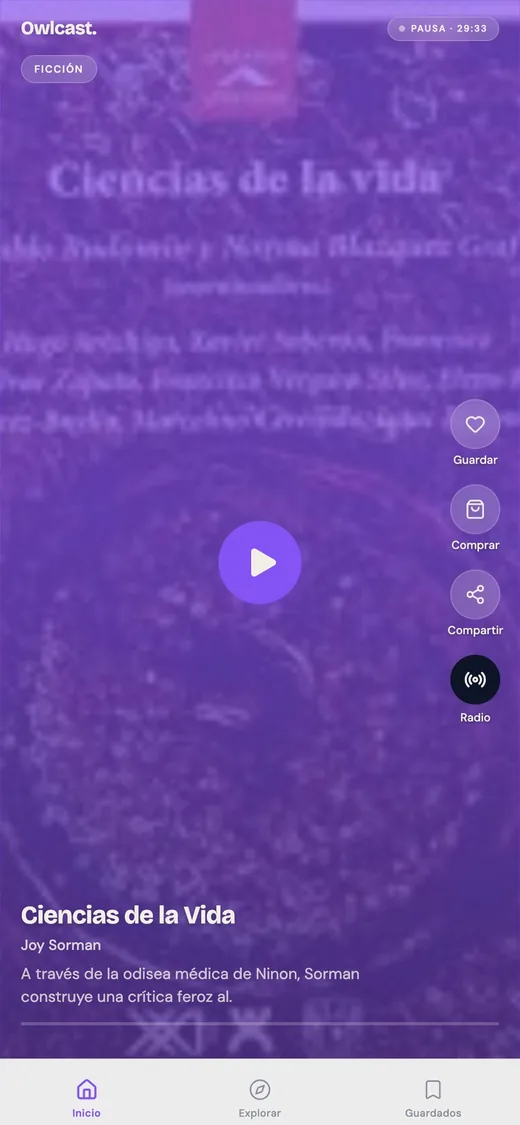
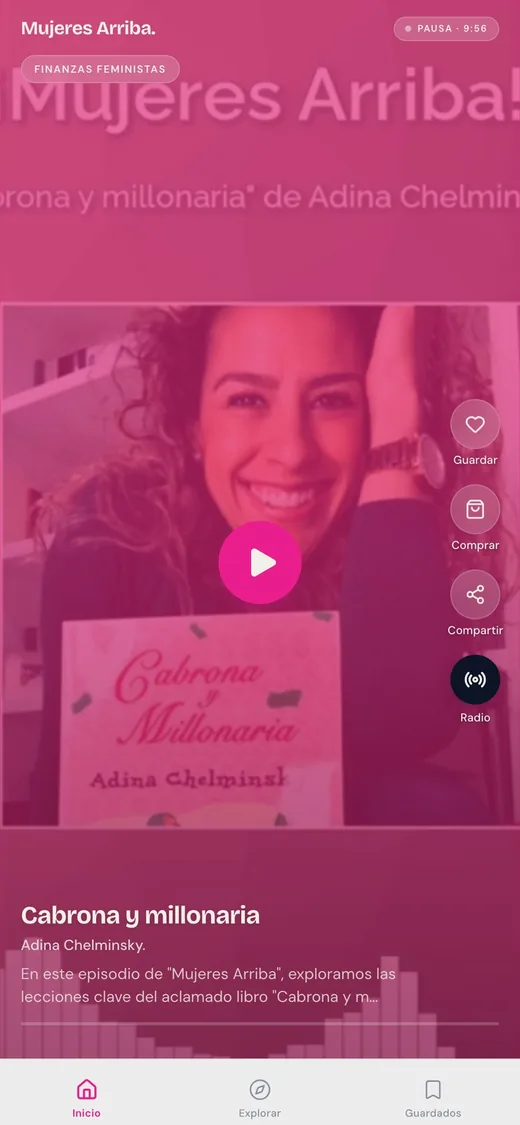
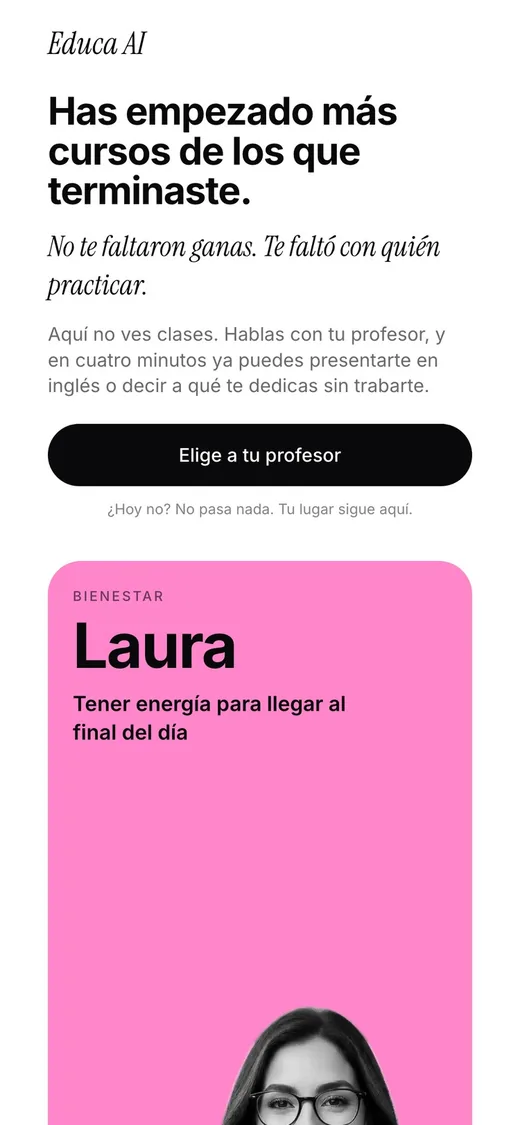
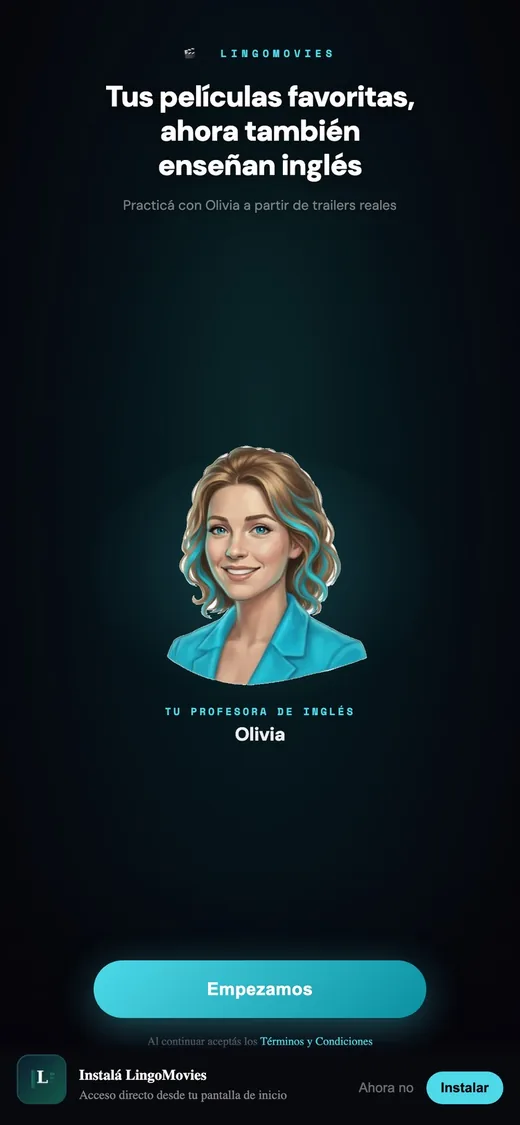
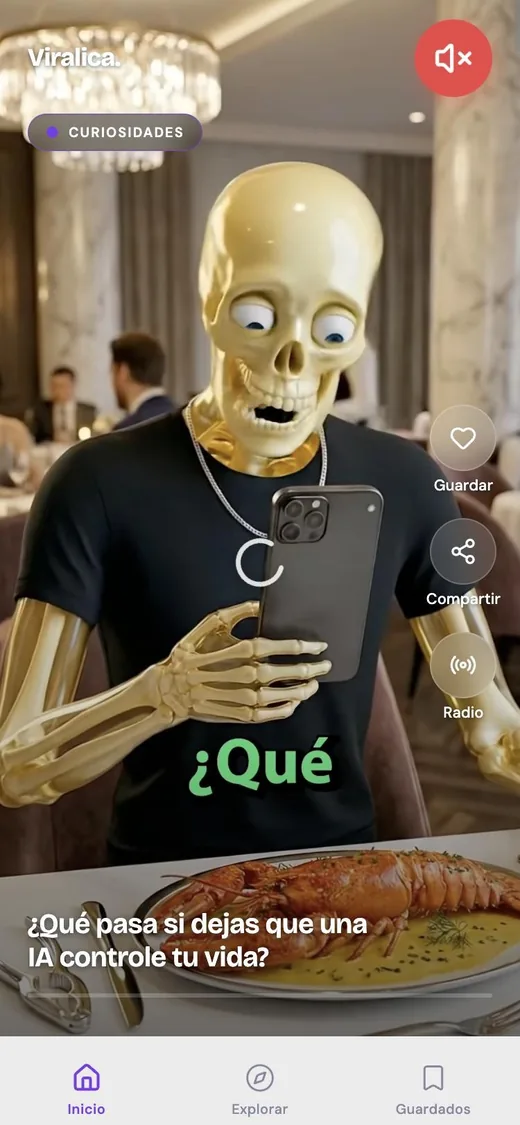
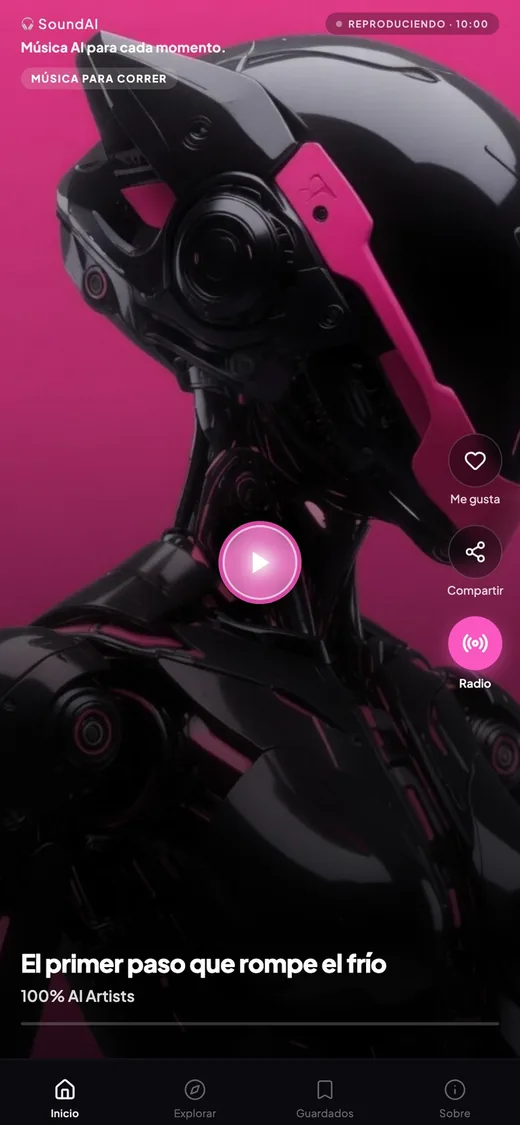
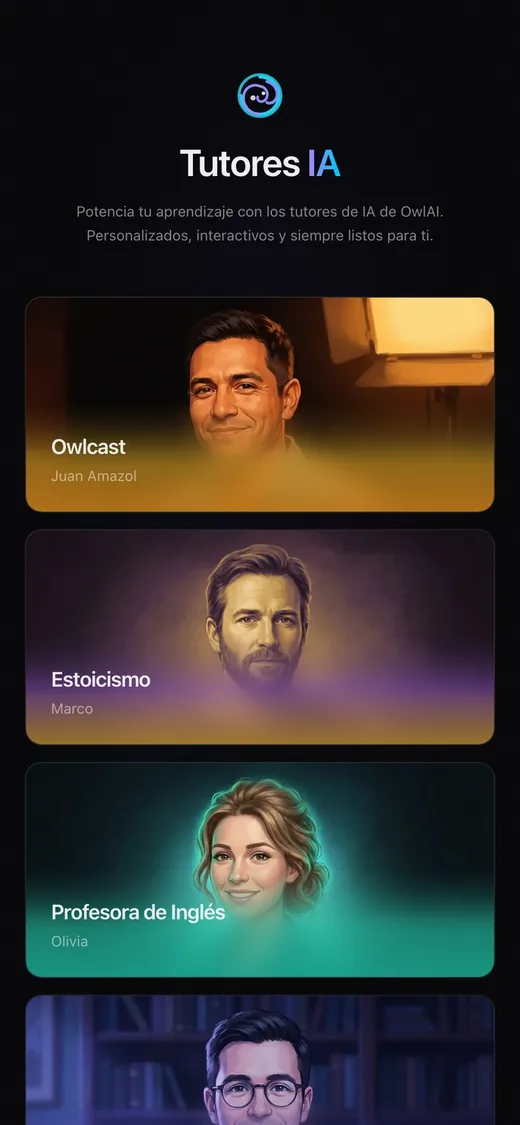
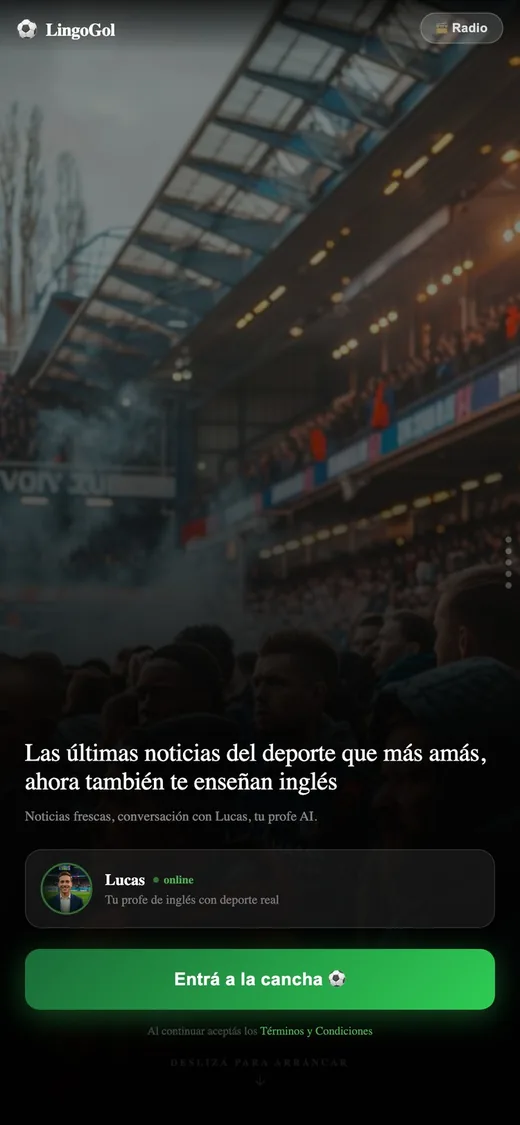
Listen, learn, watch. None were licensed title by title. FILI's faces and voices were born in Educa and in Tutores. For a VAS company, this is the new catalog you can bring to all your carriers.

21

The relationship, you've already built. The next chapter is still to be written.

For years, the advantage was connecting people. The next one can be everything you help them do once they're connected.

One hour with your team and a phone on your network. You tell it what you do, you talk to it, and you decide with the assistant in your hand. If the answer afterwards is no, nothing changes on your side.

Book a call

Demos: FILI · MOU · OwlCast · Mujeres Arriba · Educa 2.0 · LingoMovies · Viralica TV · SoundAI · Tutores IA · LingoGol

22

Sources

  1. GSMA, The Mobile Economy Latin America 2026, May 2026.
  2. Movistar Chile, qué pasó con Perplexity, March 2026; Telesemana, August 2025.
  3. Impacto TIC, Movistar Colombia y Perplexity, April 2025.
  4. Teletime, Vivo y Google AI Plus, June 2026.
  5. Canaltech, Claro y ChatGPT, September 2025.
  6. Telcel, Google AI Pro, November 2025.
  7. Bharti Airtel y Perplexity, July 2025; TechCrunch, Perplexity en India tras la oferta, August 2026.
  8. Voice&Data, fin de la oferta de Airtel, February 2026.
  9. Tecnoblog, TIM Brasil, 2026.
  10. Business Wire, Alchimie y Digital Virgo, February 2025; Bango, resultados 2025, April 2026; Digital Virgo, Latinoamérica 2026.
  11. TechCrunch, WhatsApp y los chatbots de terceros, January 2026; TechRepublic, Meta Muse, September 2026.
  12. Korea Times, SK Telecom A., January 2026.
  13. Counterpoint vía Mobile Time, celulares en Latinoamérica 2025, February 2026; GSMA, State of Mobile Internet Connectivity 2026, September 2026.
  14. a16z, LLMflation; CloudZero, precios de modelos, 2026.
  15. Softcery, costos de agentes de voz; Invideo, precios de síntesis de voz, August 2026. Scenario built on OWLAI assumptions, not market data.
  16. Demarest, consulta de Anatel sobre SVA, April 2026; El Peruano, Osiptel, condiciones de uso, December 2025.
  17. Deezer, más de 50 % de las subidas diarias son IA, July 2026; MBW, Spotify y las pistas IA fuera de recomendaciones, October 2026.
  18. The Decoder, cierre de Sora, March 2026.
  19. Alvarez & Marsal, Lights, Camera, AI, 2026.
  20. Owl & Co, informe de microdramas, October 2026; Sensor Tower, State of Short Drama Apps 2026; Adjust y Sensor Tower vía PPC Land, June 2026.
  21. Reuters, microdramas y costos, August 2026; TodoTV, primer año de ViX MicrO, July 2026; Mercado, Gennial, August 2026.
  22. Chartlex, acuerdos de licencia sellos y plataformas de IA, 2026; Goldman Sachs, Music in the Air 2026, October 2026.
  23. Señal News, Lionsgate y Runway, June 2026; Runway, USD 200 M de ARR, September 2026.
  24. YouTube, autodoblaje, May 2026; Sacra, ElevenLabs, 2026.